

“I’ll go to America, work a little, and then travel around the country.”
Sounds familiar? Of course it does. The name of the program practically begs you to imagine travel first and work second. A student hears “Work and Travel” and immediately sees the ocean, New York, long roads, photos, sunsets, and classmates back home quietly turning green with envy.
Beautiful picture. Too beautiful.
Let’s remove the postcard filter. In WAT, travel is often not the main part of the summer. It becomes a small note at the end: if money is left, if the schedule allows, if the second job does not eat the weekend, if there is someone to go with, if you still have the strength, if school does not pull you back too soon. That is a lot of “ifs” for something sold as a dream.
We have already looked at why the promised English practice often turns into a few work phrases, a noisy kitchen, and conversations in your native language at home. The travel myth works in almost the same way. On paper: America. In real life: work, commute, shared housing, fatigue, and the repeated question: “So when exactly am I supposed to see the country?”
Not because travel is impossible. It is possible. But only if you understand in advance that the program is built first around work, costs, and the interests of the people making money from your participation.
Myth No. 7: “The main thing is to get to the U.S.; the rest will work itself out”
This is the most convenient thought an agent can put into a student’s head. They are not selling a detailed travel plan, a realistic schedule, or an honest budget. They are selling a mood: “You’ll be in America! You’ll figure it out there.”
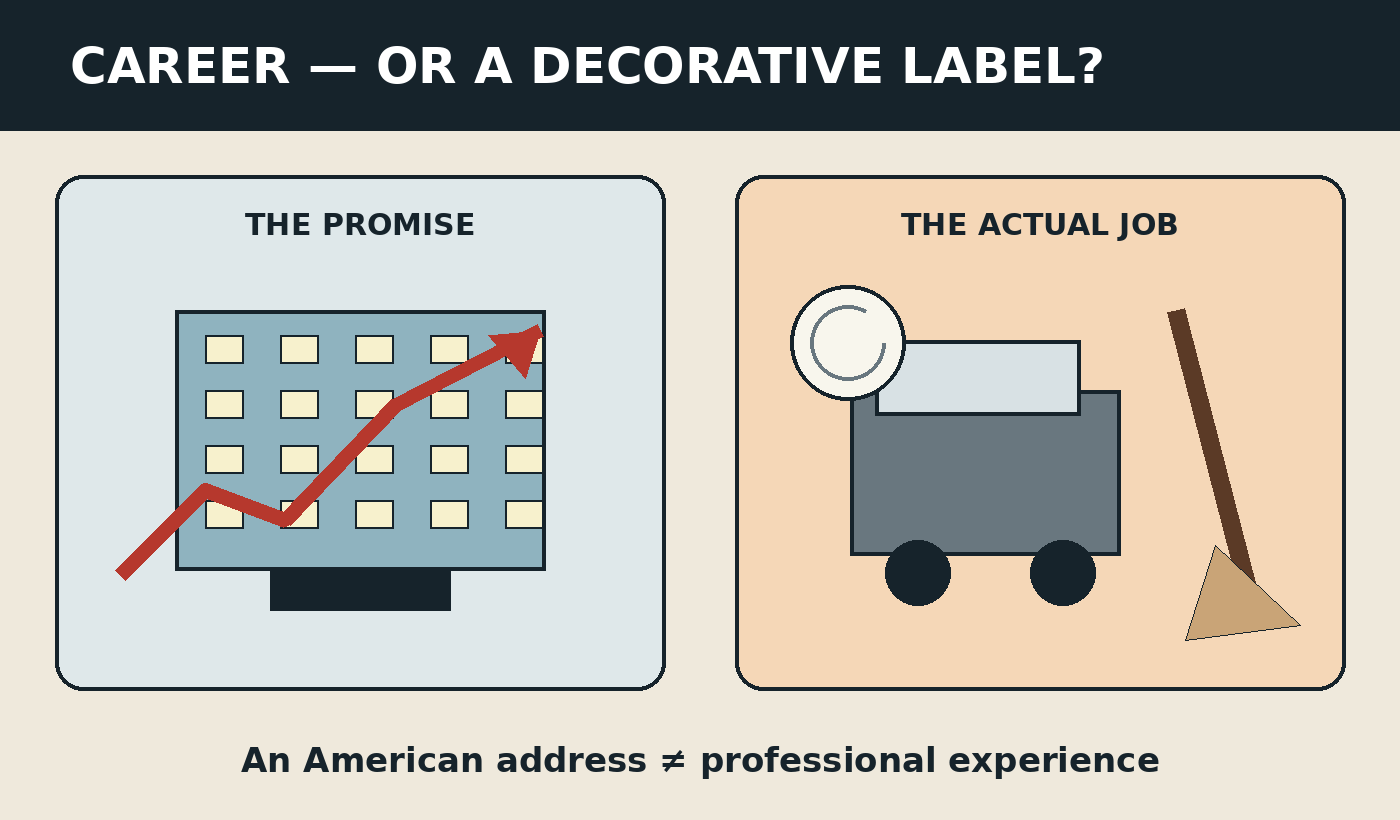
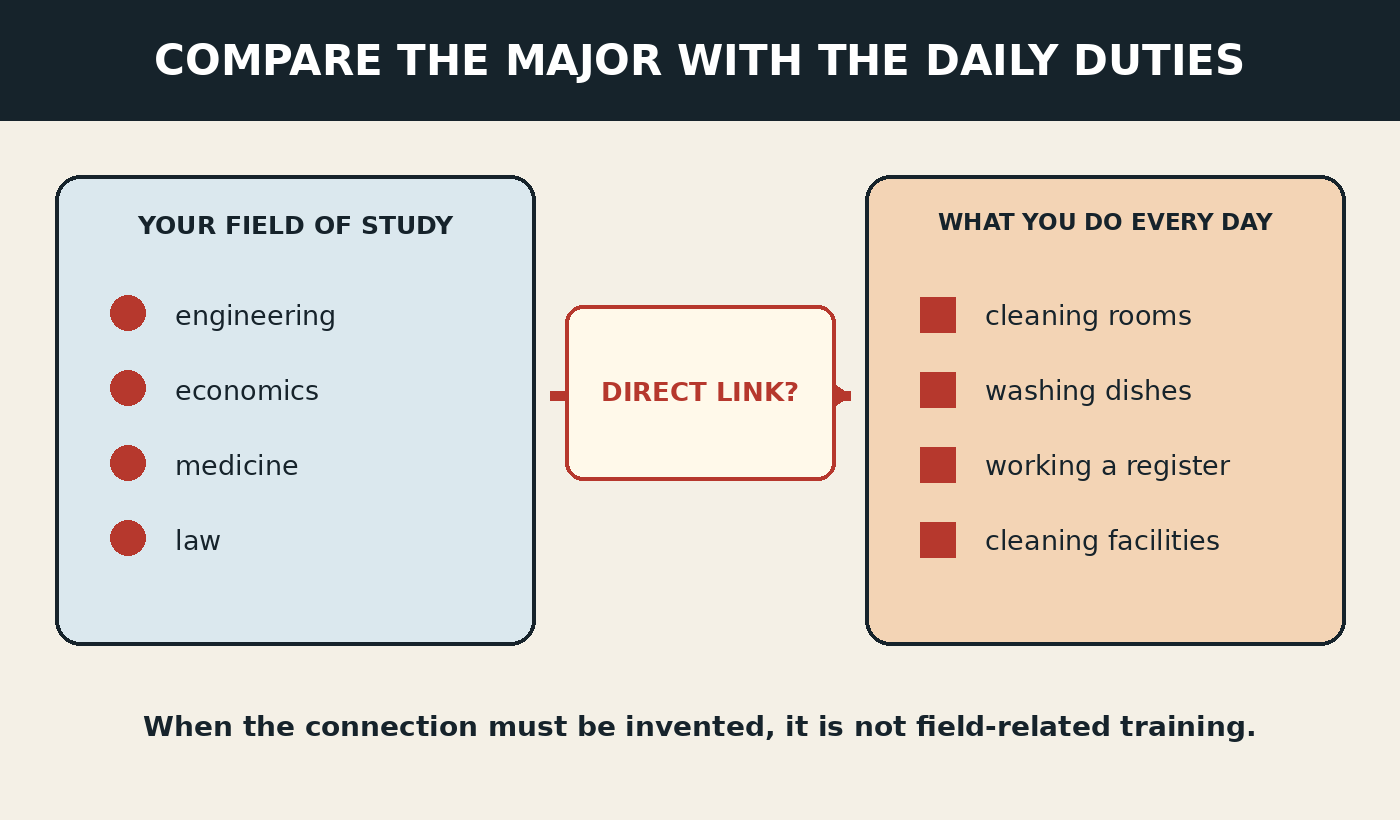
No, my friend, you may not. In a foreign country, after a kitchen or hotel shift, without a serious money cushion and without real free time, “I’ll figure it out” quickly becomes “I just need to reach the bed tonight.” Especially when you did not come for a tour. You came for low-paid seasonal work, the same work discussed in the career and international-experience myth.
Agents love smiling faces, cities, beaches, and open roads. That is understandable: selling a dream is easier than selling a sink full of dirty dishes. But the program is not built around your future photos. It is built around summer labor. You are not brought in so you can admire the country. You are brought in to fill simple, heavy, low-status seasonal jobs: kitchen, cleaning, retail counter, amusement park, warehouse, hotel, boxes, floors, dishes, “bring this,” “carry that,” “do it again.”
And this is where the unpleasant part begins. After eight, ten, sometimes twelve hours on your feet, a trip to another city often loses to food, laundry, and sleep. Very romantic, isn’t it?

Why “I’ll see America” often becomes “room — work — store”
The problem is not that America is large. The problem is that your summer is small. A student tries to squeeze too much into a few months: earn money, pay back the program cost, return a family loan, find a second job, improve English, avoid fights with roommates, keep documents safe, stay healthy, keep the job, and still travel across the country.
Does that sound like a plan? No. It is a bag of expectations into which the seller has placed everything that helps close the sale.
The site’s main page makes the same point in a more general way: before paying thousands of dollars, it is worth reading the WAT myths and calmly estimating what is actually waiting for you. The articles on money, work, cultural exchange, program cost, and real participant reviews are not random. They form a normal order: count first, dream second.
Look at a typical day without the brochure shine. Morning: commute to work. Then the shift. Then, if you are lucky or desperate enough, a second shift or the search for one. Then food, laundry, messages home, roommates, sleep. On a day off, the great desire is not discovery. It is to stop being tired. Half the summer passes, and your “travel experience” is the nearby store, the laundromat, and one photo next to a sign.

WAT geography: they promise a country, but sell a seasonal shift
The clever advertising trick is to mix two different things: being physically in the United States and actually traveling through the United States. Yes, you may be in America. That does not mean you will be seeing America.
You can spend the whole summer in one resort town where your world is the job, the room, the nearest store, and the bus stop. You can live with other students to save money, speak your own language at home, and use five short phrases at work. You can look at America for three months through a bus window on the way to a shift. Formally, you went abroad. In practice, you worked inside a small circle.
This does not mean trips never happen. They do. But they do not appear by magic. They require money, days off, a decent schedule, a route, tickets, people you trust, and a clear understanding that your employer is not obligated to protect your dream of nice travel photos.

Money: the main enemy of spontaneous travel
Now the boring part. Which means the important part.
Suppose you really want to travel. Fine. With what money? Not imaginary money from a sales presentation, but the money left after housing, food, transport, phone, uniform, deposits, household expenses, taxes, and all the little costs that somehow stay quiet during the cheerful consultation.
The money myth already shows the uncomfortable arithmetic: big earning promises sound loud, while an ordinary week after taxes and expenses looks much smaller. A separate article on how much WAT costs goes through the payments students and families often underestimate before signing.
This is why the question “Where will I go?” must come after “How much will I actually have left?” If your answer is “I don’t know, I’ll figure it out there,” you are not planning a trip. You are holding on to an advertisement.
The funny and sad part is that a student may save on normal food, live in a cramped room, take extra shifts, get exhausted, and then say, “Maybe we should cancel the big-city trip; it is too expensive.” Of course it is. When the program has already eaten the family’s savings, spending more money suddenly becomes painful.

Days off: the most expensive currency of the summer
Even if money appears, there is a second question: when will you go?
In the sales version, it sounds easy: work, take a few days off, travel. In real life, days off depend on the employer, the season, staffing, roommates, transport, and whether you are brave enough to risk fewer hours. If you have two jobs, the puzzle becomes even worse. One job gives you Tuesday off; the other wants you on Tuesday. Congratulations: you have “free time” on paper only.
Many students also postpone travel until the end: “We’ll work first, then go.” Sometimes this works. Sometimes the end of summer turns into panic: tickets are expensive, the job ends late, school starts soon, someone in the group has no money, someone gets sick, someone changes plans, and the dream route shrinks to one rushed stop and a night bus.
This is why travel must be counted like an expense, not imagined like a reward. If you want three days in New York, then where are those three days in the calendar? What do they cost? What work hours are you losing? Where will you sleep? How will you get there? What happens if the bus is late? These are not boring questions. These are the questions that separate a real trip from a pretty thought.
The phrase “cultural exchange” does a lot of heavy lifting
WAT sellers love the phrase “cultural exchange” because it sounds noble. But if your “exchange” consists of low-status work, cramped housing, conversations with the same students, and constant saving, then let us be honest: this is not exactly the picture from the sales meeting.
The cultural-exchange myth is discussed separately on the site. Here the point is narrower: travel is often used as the sweet wrapper. Nobody says, “Pay thousands of dollars to become cheap seasonal labor for three months.” They say, “You will see America.” Feel the difference?
Parents often feel it too, but too late. At first it seems their child is going for experience, language, travel, and independence. Then it turns out that most of the experience is practical survival: finding a corner to sleep in, getting to work, not spending too much, not losing the job, not getting sick, and making it to the next paycheck.
Some people do grow up through that experience. Fair enough. But then say it honestly: “I am going to do hard seasonal work and may be able to travel a little.” That is honest. “I am going to travel and work a bit on the side” is the sales fairy tale.
When travel actually works
To keep the picture fair: yes, some participants do travel. Some see several cities. Some save in advance, plan the end of work, buy tickets without panic, choose decent travel partners, and return with good memories. This happens.
But it is usually not a gift from the program. It is the result of discipline. That kind of student understands before departure how much the program costs, what job they are taking, where they will live, how much they can save, what risks exist, when the season ends, and what to do if the plan goes sideways. They do not wait for the agent to arrange a beautiful summer. They count, check, and ask inconvenient questions.
That is why the site separately discusses categories of participants. Some go with fog in their head. Others go with calculations. The first group is later shocked that reality did not match the brochure. The second group at least understands what it has entered.
If you want to travel, do not plan “America.” Plan one or two real trips. Not ten cities from a dream picture, but a specific route. Not “I’ll negotiate somehow,” but actual days. Not “I’ll earn it there,” but money already set aside for transport and housing. And always keep a reserve in case the job gives fewer hours or the expenses rise.
What parents should ask
Parents should not be shy about boring questions. Yes, the student may roll their eyes: “Mom, Dad, please don’t start.” Start. The money is often family money, the risk is often family risk, and the sales promises somehow always sound very confident.
Ask directly:
- Where exactly will the job and housing be?
- How long is the commute to work?
- How many people will live together?
- What expenses are not included in the program price?
- How much money is needed for the first weeks?
- What happens if the employer gives fewer hours than promised?
- When, exactly, will travel happen, and with what money?
- Who helps if there is a dispute with the employer?
If the answers are vague, if everyone smiles and moves the conversation back to “but it is America,” then you are not looking at a plan. You are looking at a sale. And the student pays for that dream with real money.

Also read the article on how much agents and sponsors make. After that, many warm sales smiles begin to look much more practical.
A quick self-check before paying
Open this if you still think the travel part will “work out somehow.”
If you cannot name your first real travel route, the expected cost, the days in the calendar, and the money left after required expenses, you do not yet have a travel plan. You have a hope.
Hope is not bad. Paying thousands of dollars on hope alone is.
Bottom line: you can go, but not with your eyes closed
This article is not saying: stay home and fear the world. No. Seeing the world is useful. Working abroad can also be useful. Understanding another country from the inside can be a strong experience, if you do not confuse experience with a sales postcard.
But if you go through WAT, do not lie to yourself. The main part of the program is work. Travel is possible, but it is not guaranteed, not already paid for, and not automatically protected by anyone. You will pay for it with money, time, strength, and sometimes lost work hours.
So the real question is not “Will I see America?” The real question is: “What exactly will I be able to see after shifts, expenses, commuting, and daily problems?”
If the answer is clear, good. If the answer is foggy, take off the rose-colored glasses, open the articles, count the money, and only then decide.
And when an agent again says that your summer will be unforgettable, do not argue. Just ask: how many consecutive days off will I have, how much money will remain after required expenses, and who gives written help if the job or housing is not as promised?
That is usually where the sales song ends.
Want to earn the promised “average” $6,000, get “international company experience,” improve English, and still travel around the country? Good luck… but before paying thousands of dollars to WAT agents, read the other materials on this site. Here are veeeery useful articles and excerpts from our book:
- The WAT money myth
- The WAT English-practice myth
- The WAT career and international-experience myth
- The WAT tax-refund myth
- The WAT health-insurance myth
- The WAT cultural-exchange myth
- J-1 visa interview: more than 100 common questions
- Why do students bring buckwheat to America?
- Sex. Money. WAT. Part one
- Sex. Money. WAT. Part two
- Niga, do you have a dollar?
- What does the press say?
- Murders and rapes of WAT participants
- Greedy Yankees, or how American companies profit from WAT students
- “Cheated by America,” or how the State Department and agents made money during the pandemic
- Russian WAT Roulette: program overview
- Main categories of participants, or what awaits me in America?
- Real participant reviews of WAT
- The global WAT class-action lawsuit
- How much does WAT really cost?
- How much do foreign WAT agents and sponsors make?
- The WAT setup: how students got 30 years in an American prison
- The dark side of WAT: how much agents sell students’ personal data for
- “Embarrassing and silly” — why Western Europeans do not go on WAT
- J-1 internship: another trap or something worthwhile?
These articles break down the most common WAT myths. It would be wise to read them before handing over the money, wouldn’t it?

Disclaimer
This material is for general information and for readers 18 and older. It is not legal advice and not a personal recommendation. Decisions about travel, program payment, work, visa, insurance, and expenses are the reader’s own responsibility.

 comingtoamerika.com