
Hello to everyone who has already reclaimed every tax dollar in their head, paid off the program fee, and bought a triumphant ticket to New York.
Here comes another unpleasant conversation. Not because taxes are boring. Taxes are actually simple: money was withheld, so there is less money in your paycheck. The unpleasant part is the sales pitch. For years, Work and Travel participants have been sold the comforting story that almost everything taken from their wages will come back after the trip.
“Don’t worry. You are not a U.S. citizen, so you’ll get your money back later.” It sounds confident. At an agency meeting, it almost sounds caring. In a message, it can sound like free money.
Then the student comes home, opens the paperwork, and discovers a filing fee, a mandatory tax return, federal tax, state tax, the 2018 reform, deadlines, and a fresh collection of “helpers.” At that point, the agent’s reassuring smile starts to look remarkably expensive.
You may get a small part back. You may get almost nothing. You may even pay the same people who previously promised to “help.” A neat little recycling program for student money.

A tax return is not the same thing as a refund
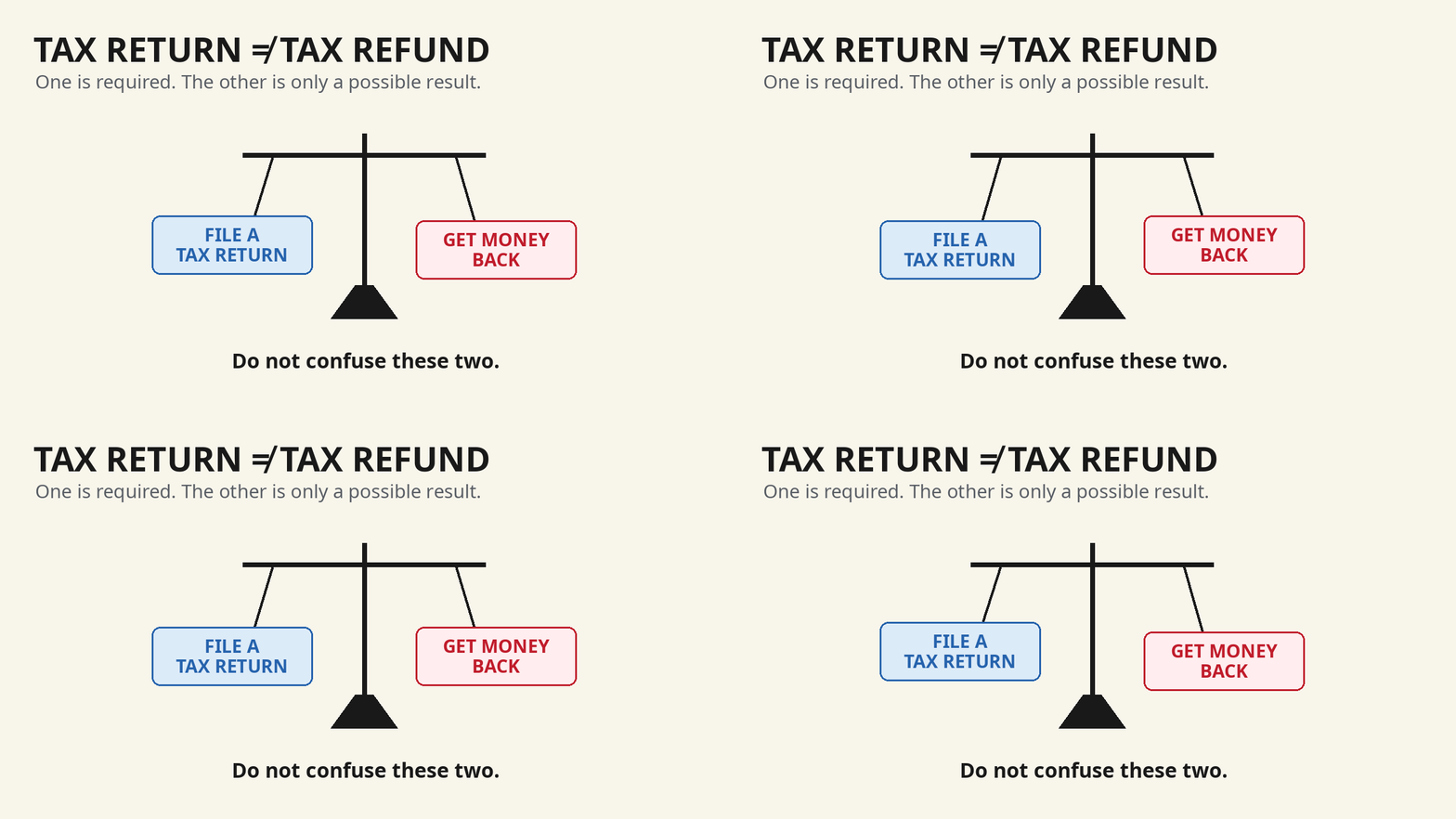
Start with the basic distinction. Having to file a tax return and having the right to receive money back are two different things. Completely different. This is also where students are most often confused.
The source article describes filing a tax return as a required part of the U.S. tax system for Work and Travel participants from 2018 onward. But a required form does not create a guaranteed refund. A tax return is not a “give me my money” button. It reports how much you earned, how much was withheld, your tax status, and what the final calculation says.
That calculation may be disappointing—especially if the student has already decided that the U.S. tax authorities were merely keeping the money in temporary storage and are now expected to return it with a ribbon.
When an agent says, “We will help with your taxes,” ask what that means. File the return? Check the withholding? Recover federal tax? Recover state tax? Or collect $100–$150 and ceremonially send you home to wait?
If the answer suddenly becomes vague, you asked the right question.
Where did the “you’ll get it all back” myth come from?
The myth is convenient for everyone except the student.
It helps the agent sell the program because the promised refund appears to reduce the true price of the trip. It reassures the parents because some of the cost will supposedly return. It comforts the student because a difficult summer can still be imagined as a profitable one.
In conversation, it sounds something like this:
“I was told not to worry about taxes because I would get everything back later. Once I got home, I learned that nobody had guaranteed a refund—and I had to pay extra for help with the paperwork.”
(Anna, 2026)
That is the whole trick. Before the student pays for the program, taxes are presented as money that will only be held for a while. After the trip, the student discovers a separate paperwork problem—and another bill.
If you have already read the myth about earnings, you can see why this tax story matters. When the entire trip depends on recovering the thousands of dollars spent just to get there, even a promised $300–$400 refund starts to look like a lifeline.
How much was withheld—and how much may actually come back?
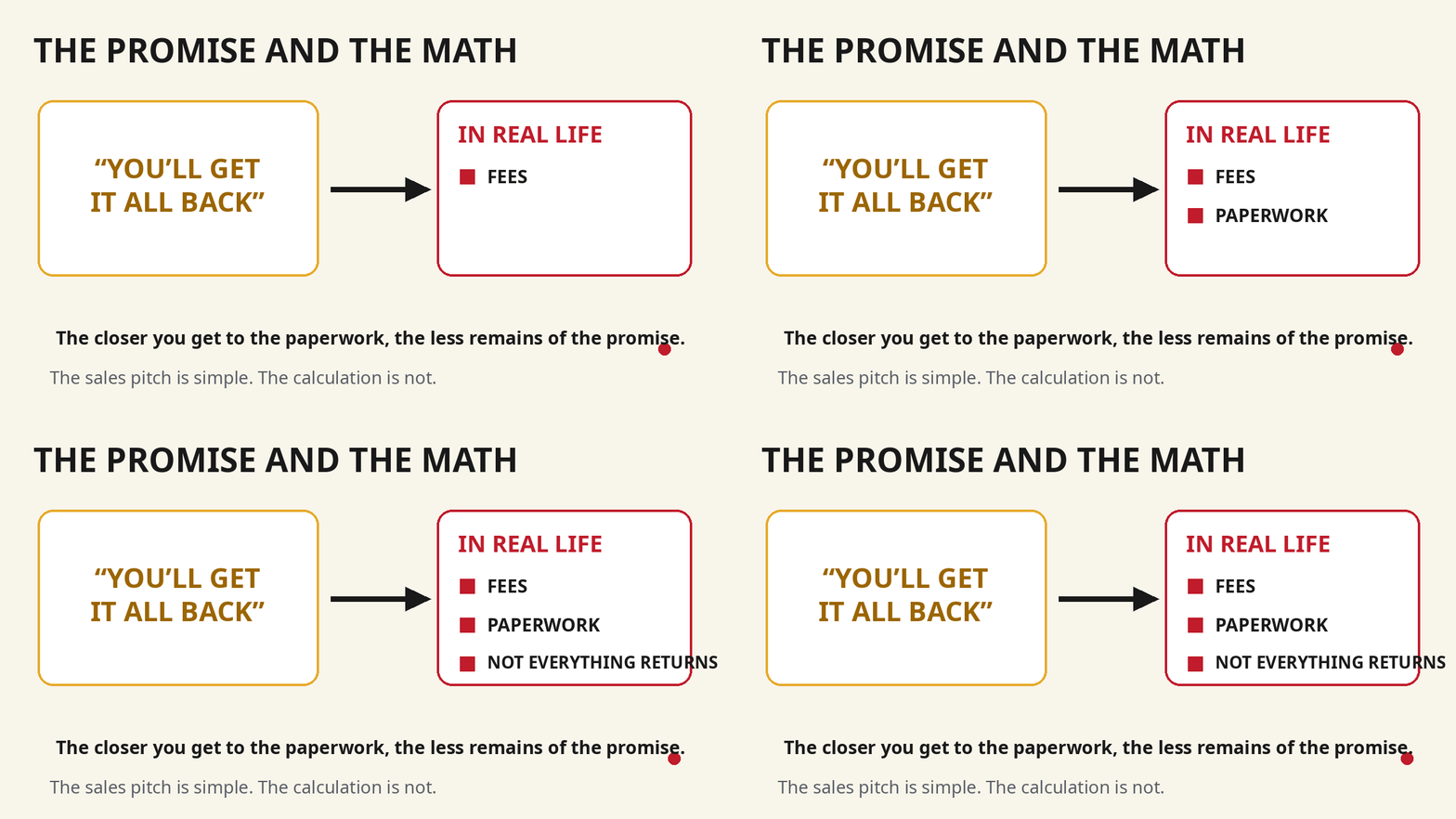
The source article gives a simple example: over one summer and one job, roughly $400–$500 may be withheld from a student’s pay. That is enough money to make anyone want it back. Then comes the dull but honest part.
Intermediaries may charge about $100–$150 or more to handle the refund. Sometimes it is a flat fee. Sometimes it is a share of whatever comes back. Meanwhile, the refund itself may be only $50–$100. The student stops asking, “How much will I receive?” and starts asking, “Why did I get involved in this at all?”
You may recover far less than everything.
Once it is withheld, it is part of a tax calculation—not your wallet sitting in a safe.
That help may cost $100–$150 or more.
After the filing fee, the amount left may be almost comical.
States differ. Withholding differs. Employers and final amounts differ. None of that changes the central point: “you’ll get it all back” is not guaranteed income and should never be placed in the trip budget as if it were.
Why 2018 matters
The source article places particular emphasis on the 2018 tax reform. It says personal exemptions disappeared for Work and Travel participants and that, after the reform, federal income tax on earnings up to $9,525 became the main reason the old story of a full refund no longer matched the arithmetic.
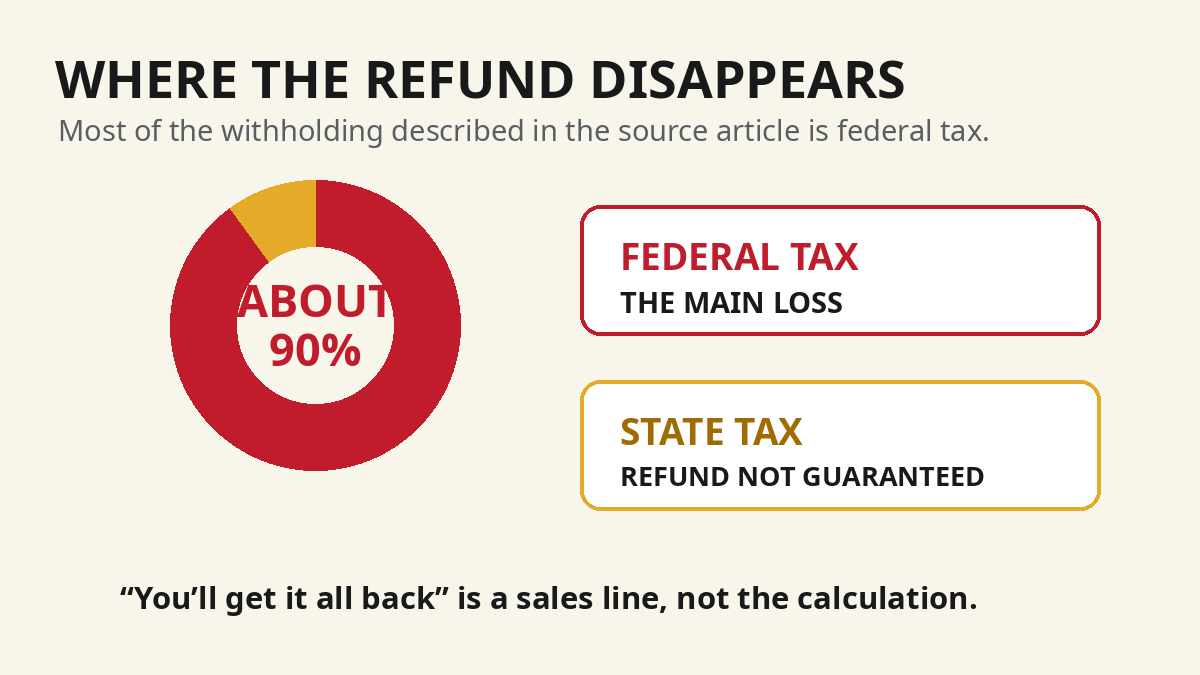
This is where the unpleasant math begins. According to the article’s explanation, the federal portion represents roughly 90% of the total withholding. That largest portion is also where the main post-2018 problem appeared.
State taxes remain, but they are smaller, vary by state, and are not always refundable. Paying a $100 fee in an attempt to recover $90 is not tax planning. It is a game of “find the catch,” played with your own money.
“Tax specialists” and the new checkout counter after the trip
As the old myth began to crack, a convenient new service appeared. Students were directed to intermediaries who supposedly knew how to recover everything. Officially, they were helpers. In practice, they became another checkout counter on the student’s route.
The sales pitch is easy. American tax forms look intimidating. The agent says, “We have people who will take care of everything.” Those people promise a result. The student hands over documents, pays, and hopes that anyone calling themselves a specialist knows what they are doing.
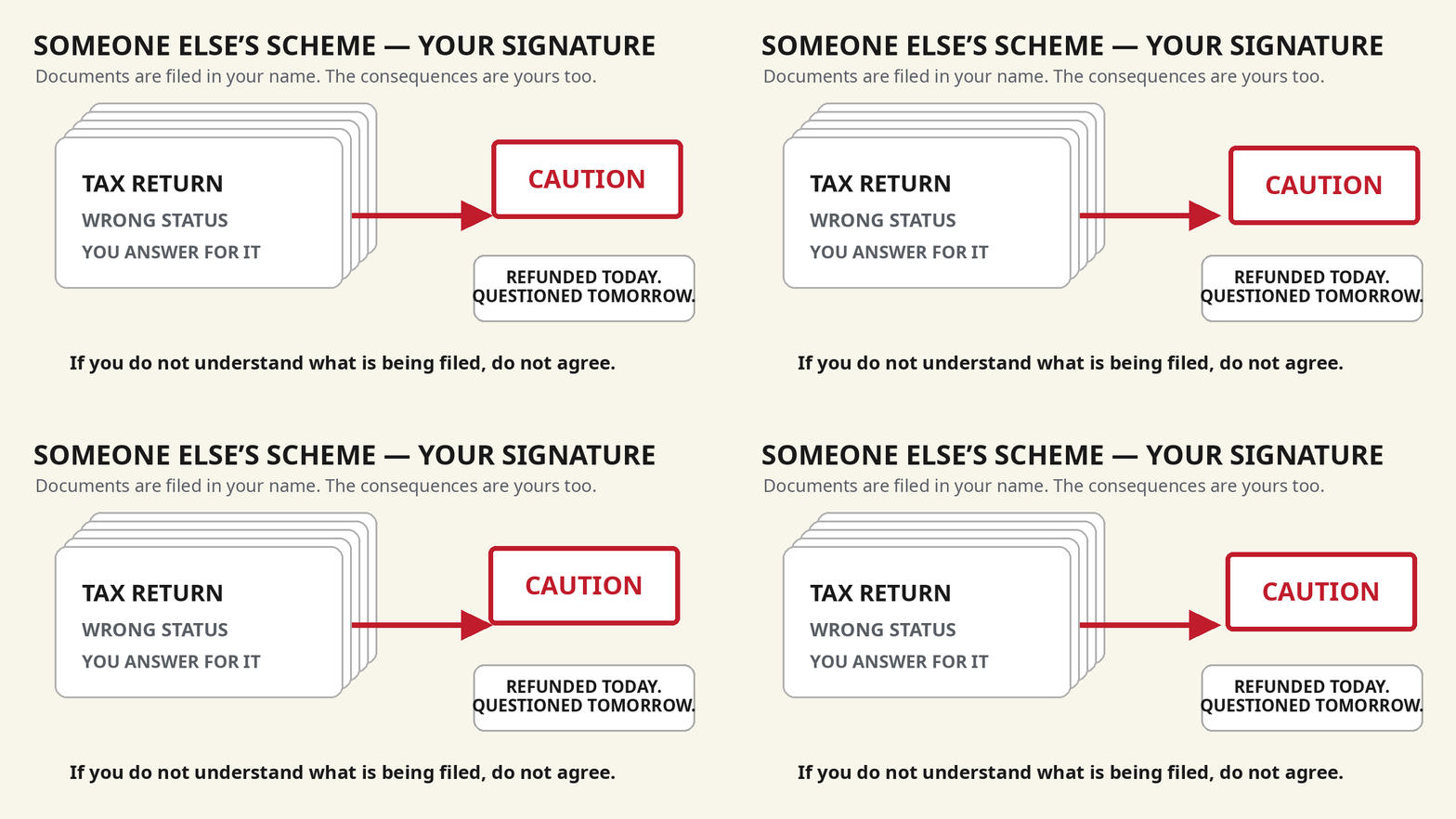
The problem is that the return is filed in the student’s name. Not the agent’s name. Not the “helper’s” name. Not the name of the friendly person smiling across an office desk. The student’s name.
The source article describes that danger directly: intermediaries may recover federal tax by telling the U.S. tax authorities that Work and Travel participants are residents. The student celebrates the refund, the intermediary takes a fee, the agent keeps selling the program, and the risk stays with the person whose name and signature are on the documents.
The $1,200 payment: when old “help” came back to visit
The source article gives a telling episode. In 2020, many former Work and Travel participants—including Russian students—received pandemic-related payments of $1,200 from the U.S. Treasury. For some, it was unexpected money. For others, it was a reason to panic.
Why? The article’s explanation is that some students had previously used questionable “helpers” to recover federal tax. If a return had been filed as though the student were a U.S. tax resident, the system could continue treating that person as a resident. Then came a payment many of them had never expected.
First, excitement. Then questions. Then silence from the people who had once recommended “reliable specialists.”
The same old arrangement: the agent sold the program, the intermediary collected the money, and the student inherited the consequences.
Why agents dislike this conversation
Because an honest conversation about taxes makes the program harder to sell.
Imagine telling a room of prospective participants: “You probably will not recover part of the tax. Filing may cost extra. The return may be mandatory, but a refund is not guaranteed. And questionable methods can create problems in your name.” Is it a beautiful sales speech? Not particularly. Will students rush to pay? Also not guaranteed.
It is much easier to rely on reassuring phrases:
- “Do not worry; we will help with the taxes.”
- “You are foreigners, so a lot of it will come back.”
- “Just keep all the documents.”
- “We will handle everything after the trip.”
- “We have trusted people.”
None of those sentences sounds like an obvious lie on its own. Together, however, they create a false impression that taxes are an almost guaranteed addition to the student’s earnings. It is ordinary advertising dressed in accounting language.
That is why this tax myth belongs beside the myth about improving your English, the career myth, the cultural-exchange myth, and the article about how U.S. employers profit from participants. The picture becomes less cheerful—but considerably closer to real life.
Quick check: should you believe the refund promise?
Open each question and look at where the unpleasant part of the conversation usually hides.
The agent says: “You’ll get all your taxes back”
Ask for a written list of the exact taxes: federal, state, and local. A general answer is not a calculation. It is a sales conversation.
The agent says: “We’ll help you file”
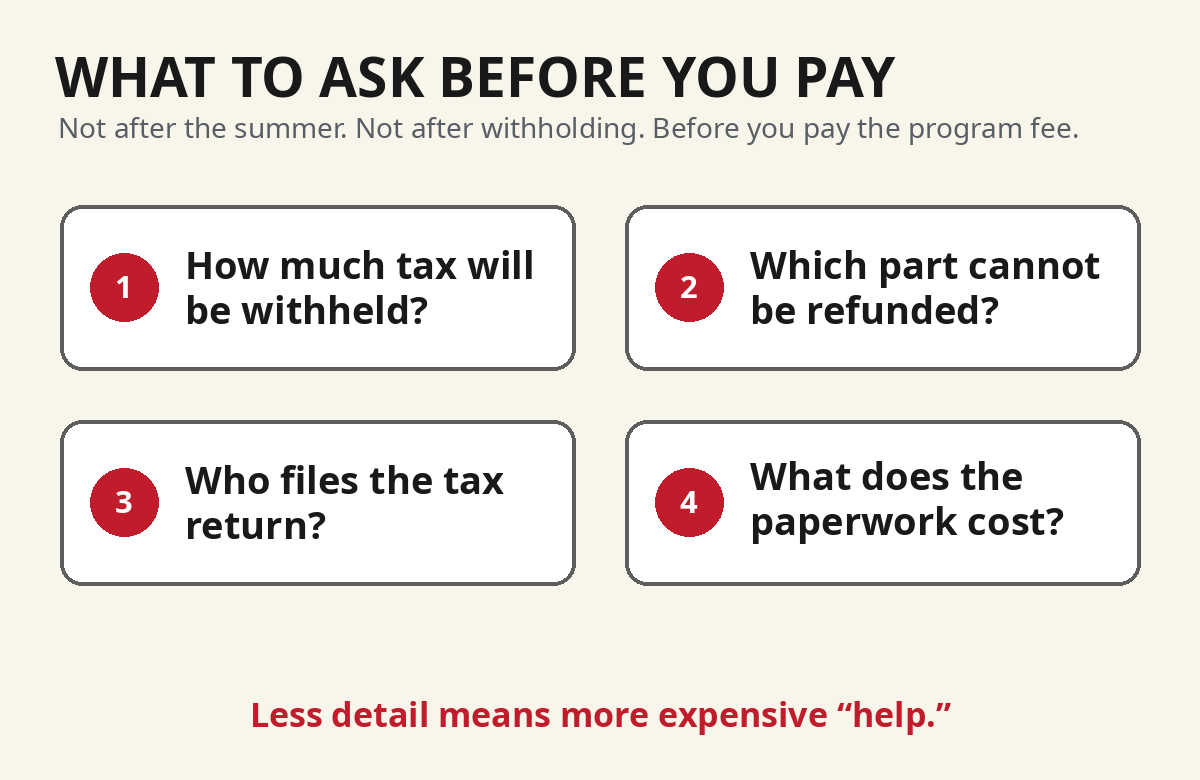
Ask what the help costs, who files the return, and in whose name. “We’ll help” without a price is not yet help.
You are promised a full federal-tax refund
Stop and ask for the legal basis. If someone wants to file as though you were a U.S. tax resident, do not treat that detail as harmless.
You are told: “Everyone does it”
That is a favorite line in questionable schemes. When the consequences arrive, “everyone” tends to disappear.
What the student needs to remember
First: taxes are not a future gift. Do not budget a refund as guaranteed income.
Second: filing a return and receiving a refund are not the same thing. Many people must file paperwork; far fewer are guaranteed money back.
Third: the tax-refund service may cost so much that the refund stops making financial sense.
Fourth: do not allow strangers to file documents in your name when nobody has explained what those documents say—especially when your tax status is involved.
Fifth: if the agent cheerfully promises “you’ll get everything back” before you pay for the program, ask for that promise in the contract, in plain language. Not in a friendly message. Not verbally. Not “we always help.” In writing: what comes back, what the service costs, and who is responsible if there is no refund.
This is usually where the room becomes quiet.

The bottom line: withheld tax is not your backup wallet
The most honest formula is this: withheld tax is no longer your backup wallet. The money has entered the U.S. tax system. Some of it may come back. Some may not. Filing may cost extra. And questionable “help” can produce future trouble instead of money.
Do not build the trip around a promised refund. Build it around a sober calculation with no miracles included: the program fee, realistic earnings, housing, food, transportation, insurance, taxes, and all the other “small details” the agent somehow remembers only after payment.
If the trip still makes sense after that calculation, good—you are at least going with your eyes open. But if the entire financial case depends on “you’ll get the taxes back later,” stop now and read this article again.
Later will be too late. The money will be gone. The documents will be signed. And the agent will say the usual line: “We warned you. You simply misunderstood.”
We also publish veeeery useful articles and other excerpts from our book:
- The Work and Travel myth about money and earnings
- The Work and Travel myth about practicing English
- The Work and Travel myth about career and international experience
- The Work and Travel tax-refund myth
- The Work and Travel health-insurance myth
- The Work and Travel cultural-exchange myth
- The J-1 visa interview and more than 100 common questions
- Why do students take buckwheat to America?
- Sex. Money. Work and Travel. Part One
- Sex. Money. Work and Travel. Part Two
- “N—, do you have a dollar?”
- What did the press say?
- Murders and sexual assaults involving Work and Travel participants
- Greedy Yankees: how U.S. companies profit from Work and Travel participants
- “Cheated by America”: how the State Department and agents profited from students during the pandemic
- Russian Work and Travel Roulette: program overview
- The main categories of participants—or what awaits me in America?
- Real participant reviews of the Work and Travel program
- The global Work and Travel class-action lawsuit
- How much does the Work and Travel program cost?
- How much do foreign Work and Travel agents and sponsors earn?
- The Work and Travel setup that left students facing 30 years in a U.S. prison
- The dark side of Work and Travel: how agents trade students’ personal data
- “Humiliating and silly”: why Western Europeans do not join Work and Travel
- The J-1 intern program: another rip-off or something worthwhile?
Important
This article is intended for readers aged 18 and over and provides only a general overview. It is not legal or tax advice. Before filing any documents, verify the current requirements and consult an independent professional when necessary.
Copyright © 2026. All rights reserved.
 comingtoamerika.com